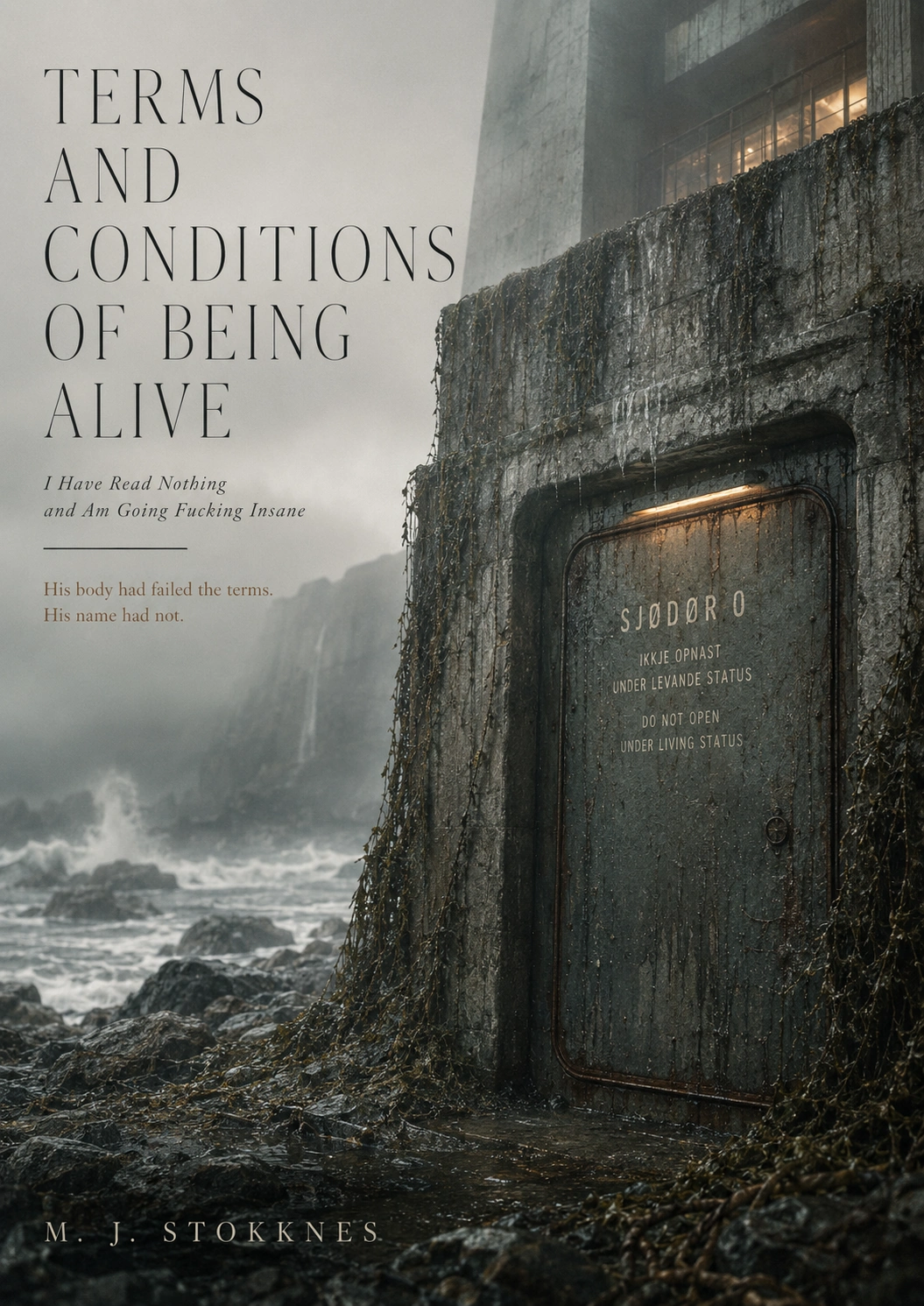
A cold Norwegian dystopian novella about consent, memory boundaries, institutional continuity, and a tower-city that works well enough to remain dangerous.
The premise is administrative rather than mystical. Tormod can still work, remember routines, recognize neighbours, and perform the tasks that make him useful. What he cannot reach cleanly is the part of his own history that Varden has classified as a continuity problem.
The novella treats consent as infrastructure. A signature can survive the person who gave it; a status can outlive the memory required to understand it; and a society can become monstrous without ceasing to function. Varden is dangerous precisely because the lights remain on.
- consent
- memory
- Varden
- bureaucracy
- survival
Consent without recall
What does agreement mean when the institution retains the document and the person retains only the consequences?
Functional continuity
Procedural memory, medication, trauma, and approved memory boundaries keep a valuable worker operational.
A working dystopia
Food, power, medicine, hierarchy, and weather make Varden a lived society rather than a symbolic prison.
“His body had failed the terms. His name had not.”Terms and Conditions of Being Alive
For readers of cold institutional dystopia, psychological horror, bureaucratic systems, enclosed societies, and speculative fiction that insists the machinery must make sense.
Formats and editions
| Format | Status | Price | ASIN | Link |
|---|---|---|---|---|
| Kindle eBook | Not created | — | — | Not available |
| Paperback | Not created | — | — | Not available |
| Hardcover | Not created | — | — | Not available |